Physiology First: My Red Light Recovery Ride
This morning was a masterclass in why I apply a Physiology First framework to every session, looking at the internal engine before I look at the wattage. Between a late meal and the devastating news about my friend Murray being struck by a motorist—suffering a serious brain bleed—my autonomic nervous system was in a state of high alert.
My Morning Prognosis: Red Light
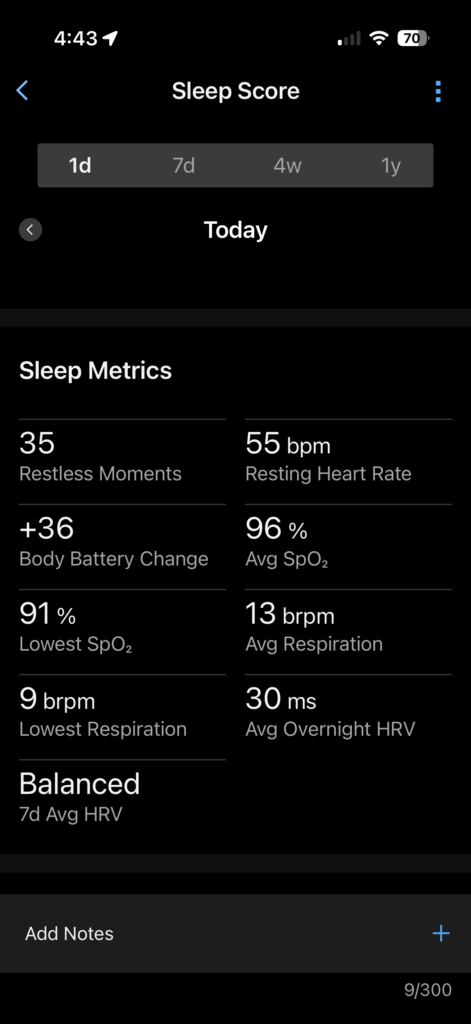
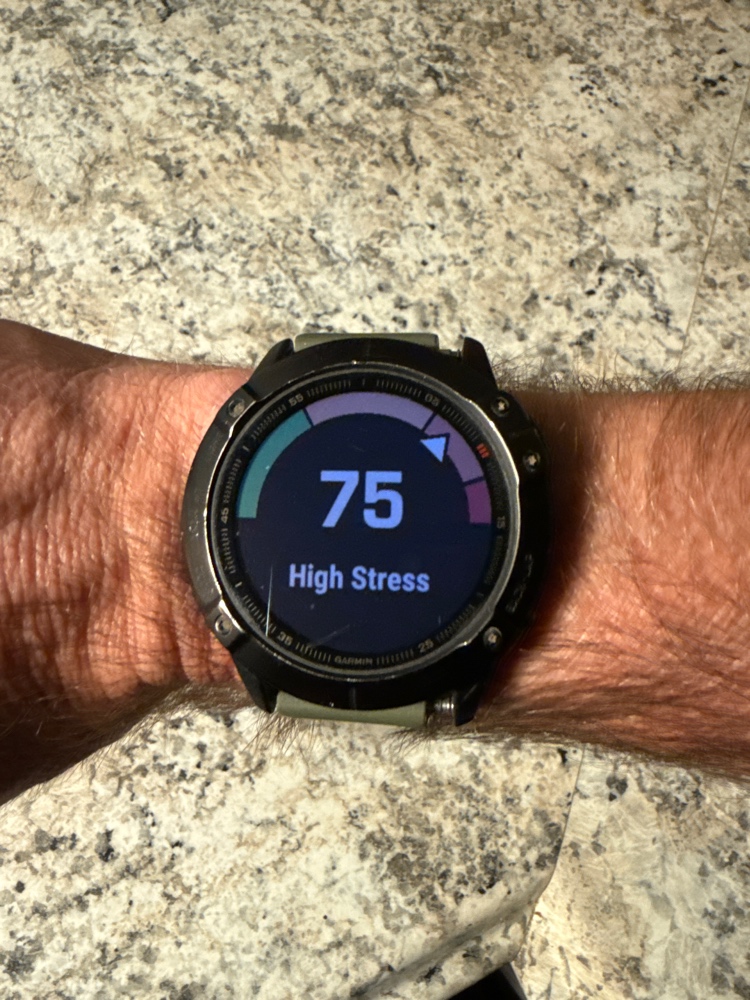
The metrics were undeniable. A Body Battery recharge of only +36 and an HRV Stress score of 75 indicated massive sympathetic dominance. Normally, this is a “No-Go” day. However, for my mental health and to maintain my commitment to the community, I elected for a strict recovery ride. This approach builds on the principles I discussed in my previous post, The Power Illusion.
Applying Physiology First via the Rogers Protocol
To ensure this ride didn’t deepen the deficit, I anchored the effort to the latest research from Dr. Bruce Rogers. While the standard VT1 is often set at an Alpha1 of 0.75, I utilized a custom approach to define my personalized “safety midpoint” based on the day’s peak autonomic state.
Using the formula HRVT-1c = (Peak Alpha + 0.5) / 2, I established a precise threshold. With a peak Alpha1 of 1.97 during the initial “vagal bounce” phase of the ride, my recovery floor for today was set at 1.235.
Reference: Improving the HRVT1 agreement – Dr. Bruce Rogers (IJSPP 10/2024)
The Physiology First Data: 64 Minutes of Autonomic Safety
| Metric | Value (Alpha1 ≥ 1.235) |
|---|---|
| Time in Zone | 64 Minutes |
| Average Heart Rate | 126 bpm (±3) |
| Average Power | 159 Watts |
| Respiration Rate (AlphaHRV) | 25 bpm |
| RR-A1 Ratio | 0.29 |
| Average SmO2 | 37.4% |
| Minimum SmO2 | 13.4% |
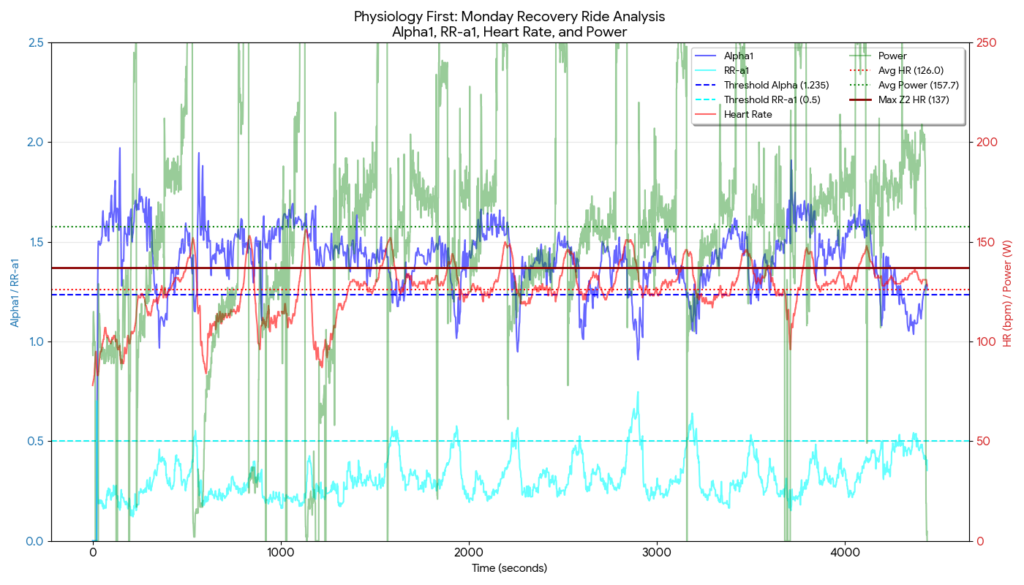
Physiology First Analysis: Smoothed Power (30s) and RR-a1 (10s) relative to the 1.235 Alpha floor and 137 bpm HR ceiling.
Conclusion: Defending My Baseline
I didn’t ride today to get faster; I rode to stay grounded. When the overnight metrics and life events flash a “Red Light,” the temptation is to either skip the work or “ride off the stress” with too much intensity. By using AlphaHRV and SmO2 as real-time biofeedback, I turned a recovery ride into a session of active parasympathetic meditation.
The wattage was low, but the Physiology First victory was high. Today was about defending my baseline so I can be there for my clients and for Murray. One breath at a time.

Thanks for reading. If you want this kind of personal attention, with a Holistic approach, inside the Garmin Ecosystem, then join me every morning for LIVE CLASSES at: