When analyzing Garmin sleep recovery, alcohol is often the “X-factor” that derails even the most disciplined athlete. We’ve all heard it before: “It was just a couple of glasses of wine.” But as a coach who lives by the mantra Physiology is King, I’m less interested in what the menu says and more interested in what the internal engine is doing. To maximize your training efficiency, you must understand the metabolic tax of your evening choices.
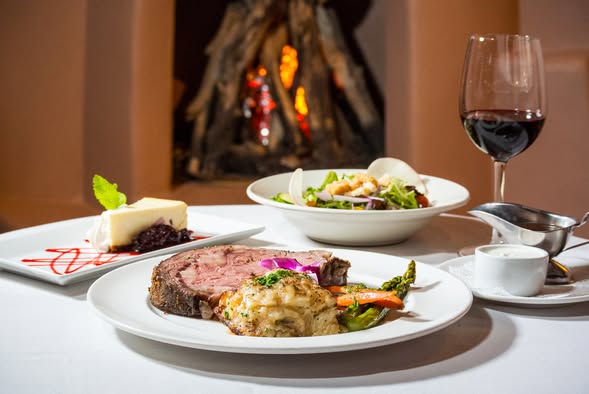
Last night, Tracy and I went out for a fantastic dinner date. The variable? Intake. I stuck to about a half-glass of red; Tracy enjoyed two. The results the next morning weren’t just a difference in “feeling”—they were a total physiological divergence captured in black and white (and orange and blue) on our Garmin dashboards.
The “Trainwreck” Profile: Garmin Sleep Recovery and Alcohol
Let’s look at Tracy’s data first. She woke up feeling like she’d been hit by a freight train, and the numbers tell us exactly why. The physiology doesn’t lie: when the liver is at work, the body cannot rest. This is a classic example of how Garmin sleep recovery alcohol interactions can sabotage your readiness.
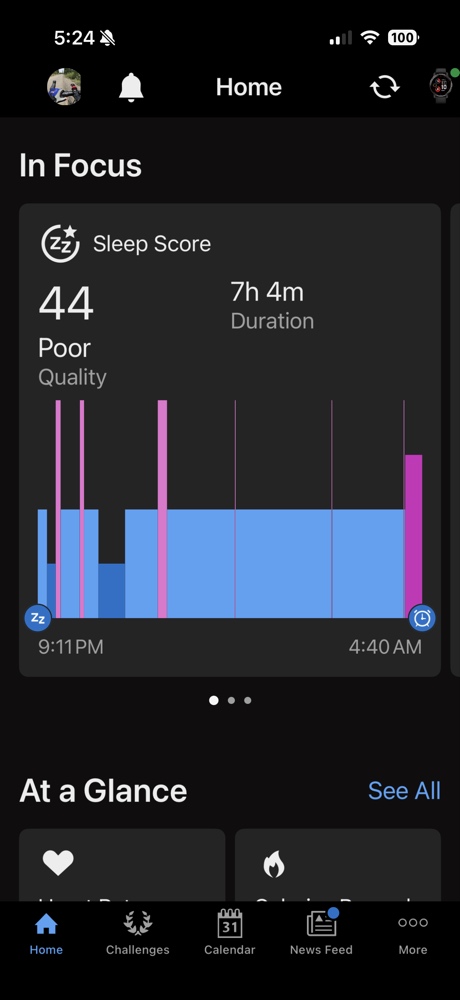
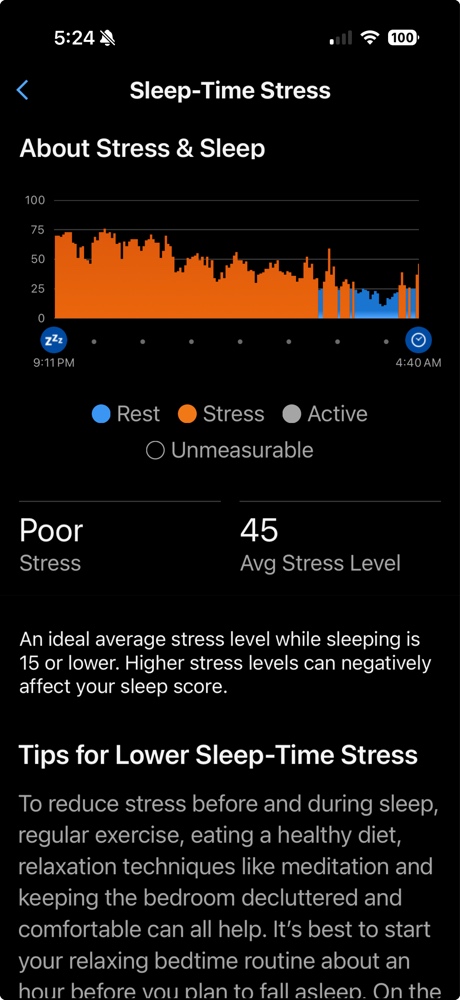
Garmin considers an ideal sleeping stress level to be 15 or lower. At 45, her Sympathetic Nervous System was stuck in “fight or flight” mode nearly the entire night. As noted by The Sleep Foundation, alcohol significantly disrupts REM cycles, meaning she only got about one hour of true restorative “blue” rest before her alarm went off.
The “Daisy” Profile: Optimal Garmin Sleep Recovery Alcohol Balance
Contrast that with my data. I woke up “fresh as a daisy,” ready to tackle a training block. By keeping the intake to a half-glass, my metabolic tax was minimal, allowing my body to achieve high-quality Garmin sleep recovery alcohol-free restoration levels during the night.
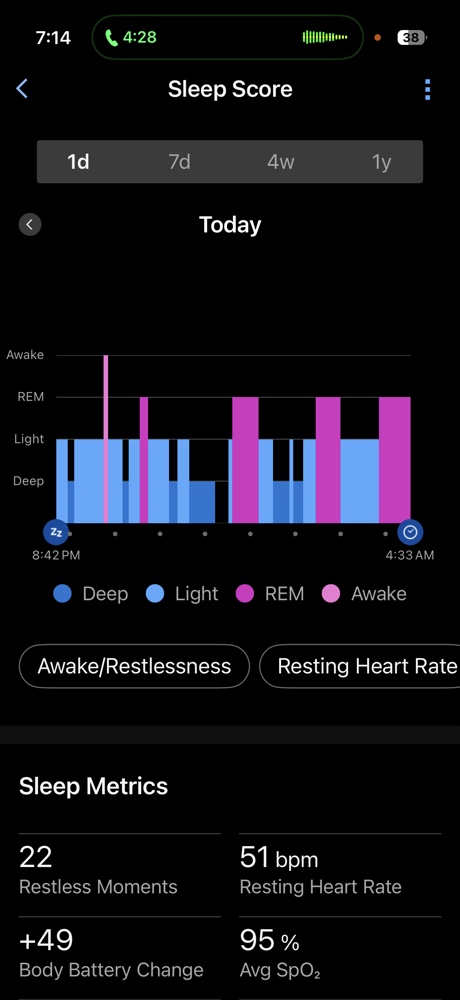
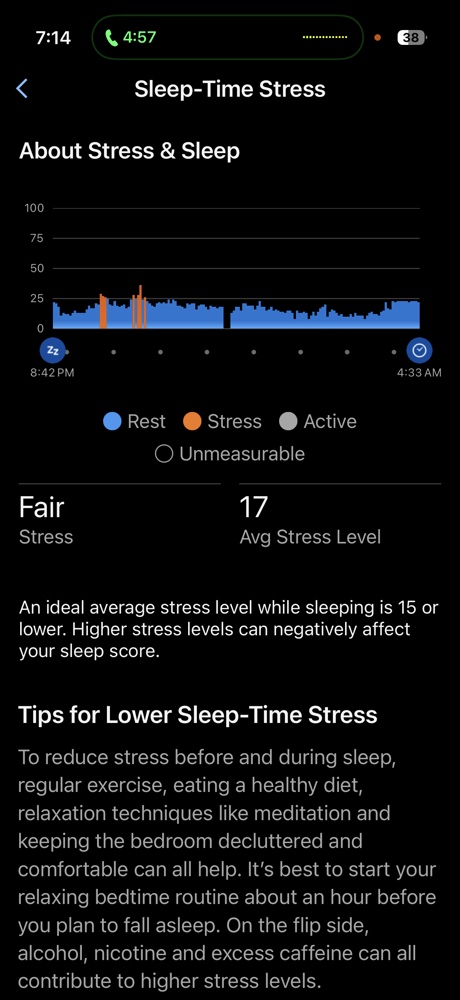
- Restoration: My Body Battery recharged by +49, whereas Tracy’s barely moved the needle.
- Efficiency: My engine spent its energy on repair, not detoxification. This is key for long-term athletic consistency.
The Garmin Guru’s Takeaway: Don’t Sabotage the Engine
When we talk about recovery, we often focus on foam rollers or supplements. But this data proves that autonomic balance is the ultimate gatekeeper. Alcohol is a “metabolic tax.” When your heart rate is elevated and your HRV is suppressed, you aren’t repairing muscle tissue—you are simply surviving.
The Coaching Lesson: If you have a high-intensity session—like Rønnestad intervals or a 3/3 Over-Under block—scheduled for the morning, that second glass of wine isn’t just a drink; it’s physiological sabotage.
Listen to your engine, not just your dashboard. If your Garmin sleep recovery alcohol data shows orange stress bars, your body is telling you to dial back the intensity for the day, regardless of what your training plan says.
Train smart, recover harder.
— Richard Wharton, The Garmin Guru
Ready to Ride with a Full Tank?
Stop guessing and start knowing exactly where your physiological thresholds lie. Let’s optimize your engine together.
Enjoyed this data-driven deep dive? Consider supporting the lab!