When Garmin HRV Stress Hits 72: A Practical Morning Read on Sleep, Load, and What to Do Next
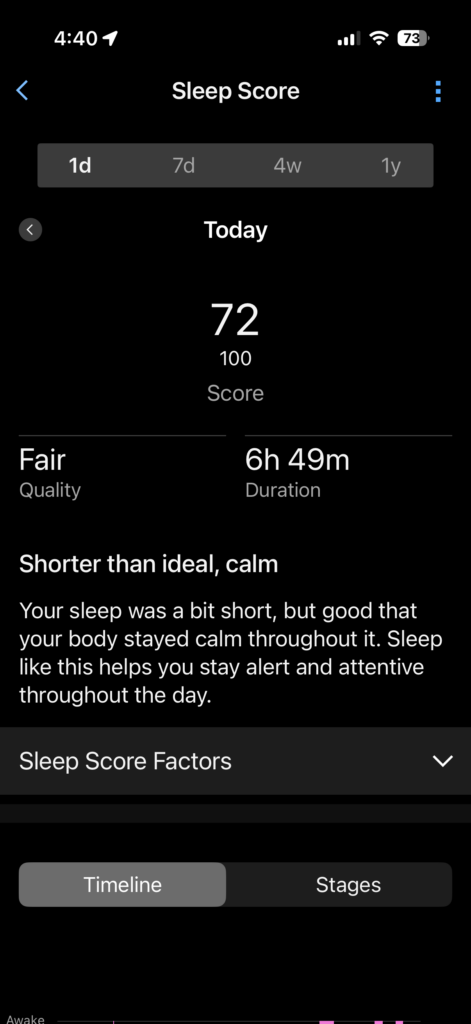
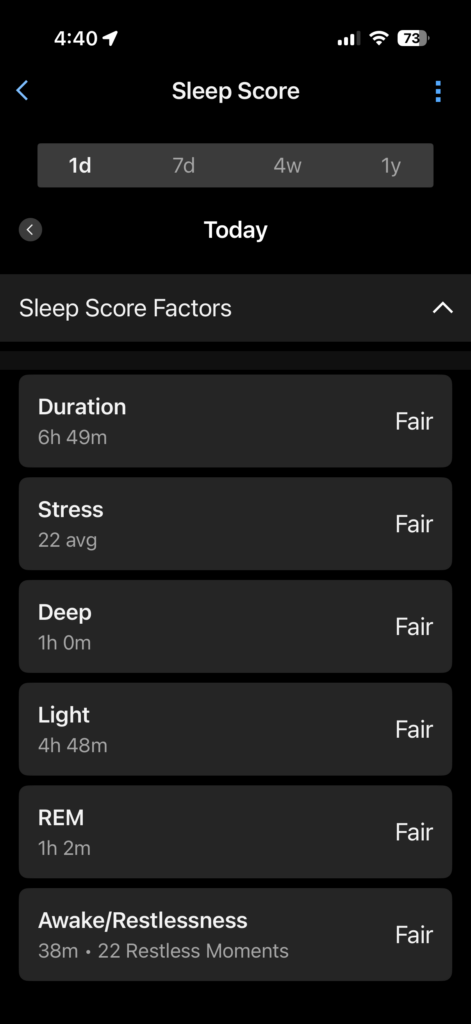
I woke to an HRV Stress of 72 on my Garmin and a Garmin Sleep Score in the low 70s. Seeing a high Garmin HRV Stress number felt alarming at first, but the rest of my overnight physiology told a clearer story: my autonomic balance was strained by short sleep and recent intensity, not collapsed. The fix was tactical and immediate: prioritize sleep tonight and keep today’s training low intensity.
Garmin HRV Stress — The data story (what the numbers mean)
My morning snapshot shows a consistent pattern:
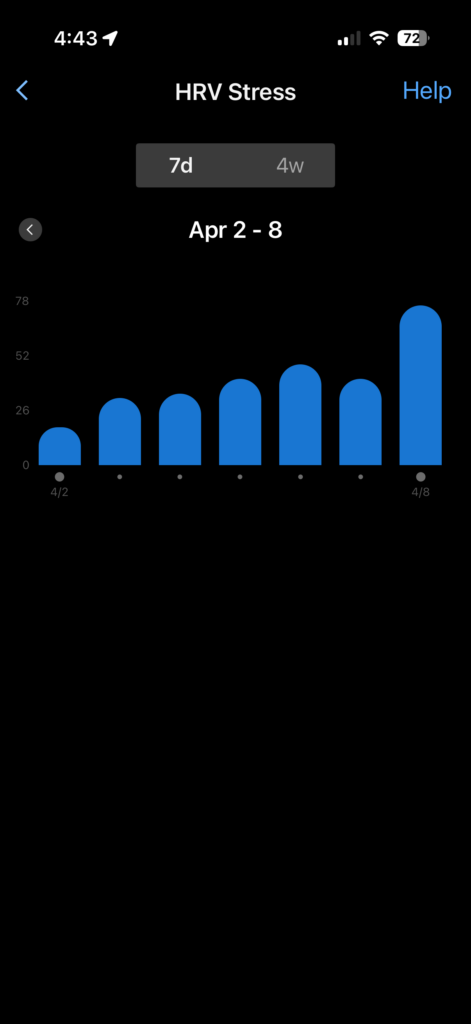
- HRV Stress = 72 — elevated, indicating tension and accumulated load, not collapse.
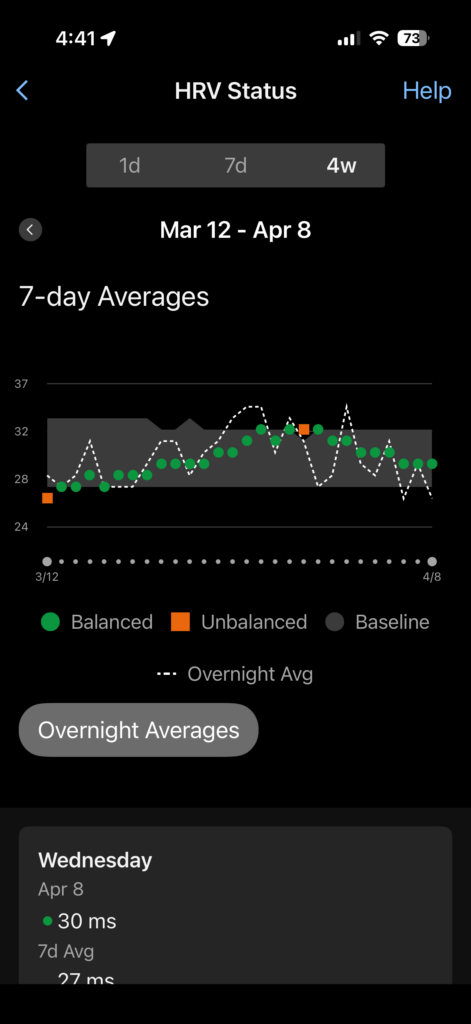
- Overnight HRV ≈ 27 ms — stable relative to my 7‑day average; not the severe suppression seen in non‑functional overreaching.
- Resting HR ≈ 53 bpm — not elevated; another sign I’m not in systemic breakdown.
- Body Battery +45 — I recharged partially; I’m not depleted.
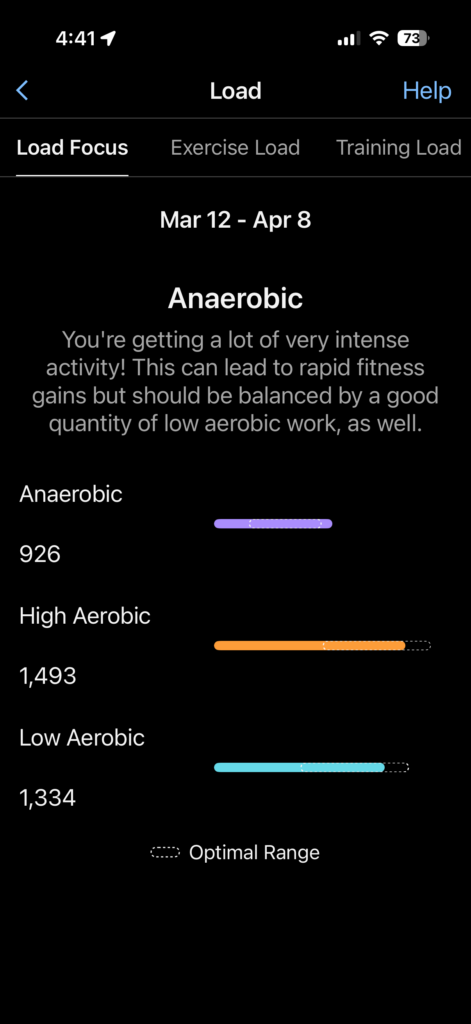
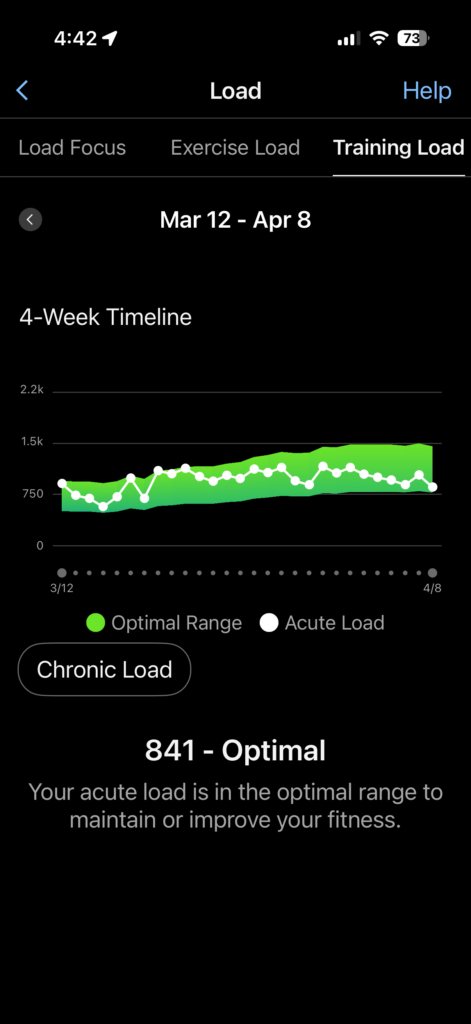
- Training load — acute and chronic loads are in the optimal range, but the focus has been anaerobic‑heavy, which raises sympathetic tone.
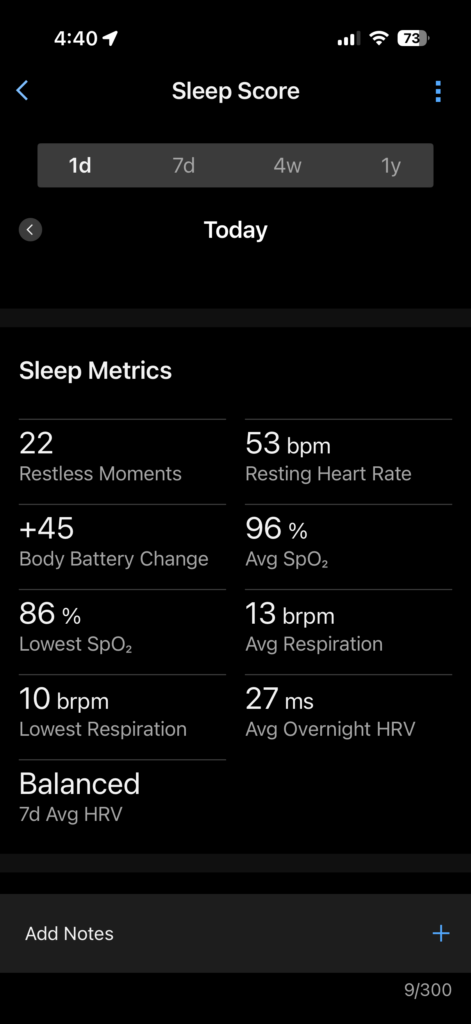
Bottom line: this is fatigue + sleep debt layered on a period of high‑intensity work — not overtraining. I treated it like a yellow‑light day: reduced intensity, restored sleep, and let the parasympathetic system reassert itself.
Why my Garmin HRV Stress is high
Short sleep and Garmin HRV Stress
6h49m is short for me. Short nights keep sympathetic tone elevated and reduce the parasympathetic window for recovery.
Anaerobic accumulation and HRV
My recent load focus shows a high anaerobic component. That kind of intensity stacks sympathetic activation even when overall load remains “optimal.”
Circadian drift and HRV response
Early wake times and inconsistent sleep timing amplify stress signals and blunt overnight recovery.
Trend, not collapse — Garmin HRV Stress in context
My 7‑day HRV Stress bars have been climbing — that’s accumulation, not a sudden breakdown. The rest of my markers (RHR, overnight HRV, Body Battery) remain functional.
Garmin Connect, Garmin Sleep Score, and the Garmin HRV Stress Test
Because I use Garmin devices and Garmin Connect, I rely on Garmin’s Sleep Score and HRV Stress features to make morning readiness decisions. Garmin’s Sleep Score summarizes duration, sleep quality, and recovery to produce a 0–100 nightly score that I use to decide whether to push or back off.
Garmin’s HRV Stress Test is a short standing test that analyzes HRV and returns a stress score (0–100) to help assess readiness for hard sessions; consistent test conditions give the best day‑to‑day comparisons.
HRV is widely used as a non‑invasive marker of autonomic balance and physiological stress. Recent peer‑reviewed work frames HRV as a reliable biomarker for quantifying stress and relaxation, supporting its use in readiness decisions.
For practical, readable explanations of what HRV reflects and how to use it day‑to‑day, see this HRV primer. For guidance on daily HRV resets and improving HRV through simple routines, see this overview.
For readers using Garmin devices, here are two useful references (replace with the Garmin pages I prefer):
External research I referenced: Quantifying Stress and Relaxation: A New Measure of Heart Rate Variability (Biomedicines, 2025).
Am I overtraining?
No. I’m in functional overreaching, not non‑functional overreaching. Functional = I can still adapt. Non‑functional = I’m digging a hole. My metrics show:
- HRV stable
- RHR stable
- Sleep calm
- Body Battery recharging
- Load optimal
- HRV Status balanced
This is not overtraining. This is fatigue + sleep debt.
What today should look like
Train, but intelligently. The goal is to reduce Garmin HRV Stress tomorrow and protect adaptation.
Today’s prescription
- Zone 2 only: 60–90 minutes, steady effort, no surges.
- Breathing: emphasize nasal breathing and long exhalations.
- Caffeine: avoid after mid‑day.
- Sleep hygiene: wind down 90 minutes before bed; dim lights; aim for 8+ hours.
- Recovery: add a 10–15 minute mobility or breathing session post‑ride.
Avoid: VO2, threshold, tempo, long hard sessions, and late‑night stimulants.
3‑day microcycle (quick)
- Day 1: Zone 2 steady ride + sleep focus.
- Day 2: Active recovery or rest; short walk, mobility, sleep priority.
- Day 3: If Garmin HRV Stress drops into the 40s–50s and sleep improves, reintroduce a short high‑quality session; otherwise repeat low intensity.
Linking this to my coaching content
For deeper context from my coaching archive, link to one of my earlier posts: Read more on OnlineBikeCoach. This connects the morning readiness decision to my longer training philosophy and plans.
Consult or join VQ Velocity Virtual Studio
If I want personalized guidance, I can book a consult or join the VQ Velocity Virtual Studio for structured programming and daily readiness support.
Join VQ Velocity Virtual Studio
Or book a one‑on‑one consult to review my recent data and get a tailored 7‑day plan. Email or booking link can be added here for direct scheduling.
Closing note
My body is not broken — it’s asking for more sleep and a lower sympathetic load. Follow the plan above tonight and tomorrow morning I should see Garmin HRV Stress begin to fall. If I want, I can convert this into a daily readiness protocol that gives a Go / Modified / No‑Go decision each morning based on my sleep score, overnight HRV, HRV Stress, RHR, Body Battery, and previous day’s load.