DFAA-1 Workouts are More Fun – I Wish I Had Had This Metric When I Was Running My Studios!
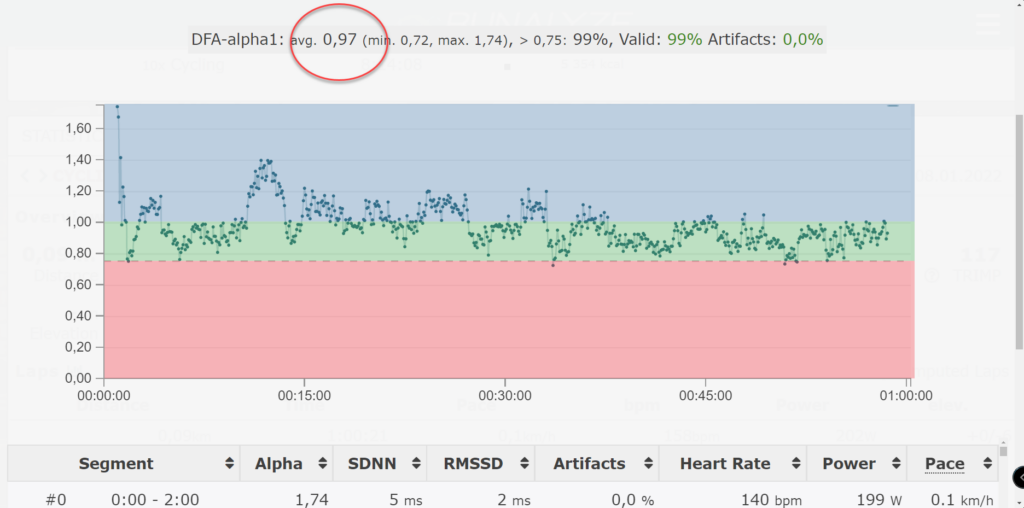
Keeping DFAA-1 between 0.75 and 0.99 over the past three weeks has given me a higher wattage output, higher heart rates, higher Calorie counts, and higher overall fitness. My weight has dropped from 73.1kg to 71.8kg. Average Power for the 60 minute rides I have performed has gone from 168 watts to 198 watts, for the same respiratory frequency. DFAA-1 is staying between 0.75 and 0.99 at 152 beats per minute. In early December, the same DFAA-1 intensities were at 145 beats per minute. My heart is adapting, and it is carrying my body with it.
Fitness Breakthroughs
Using an old copy of RaceDay Apollo, a program invented by Dr. Philip Skiba, the software showed a .9799 (97,99%) probability factor that I would be able to hold 230 watts over 30 minutes. This product is no longer on the market, but copies of it are prized. With that number in mind and knowing that I did not have much intensity under my belt, I attempted to match or possibly break this value. Here is the result:
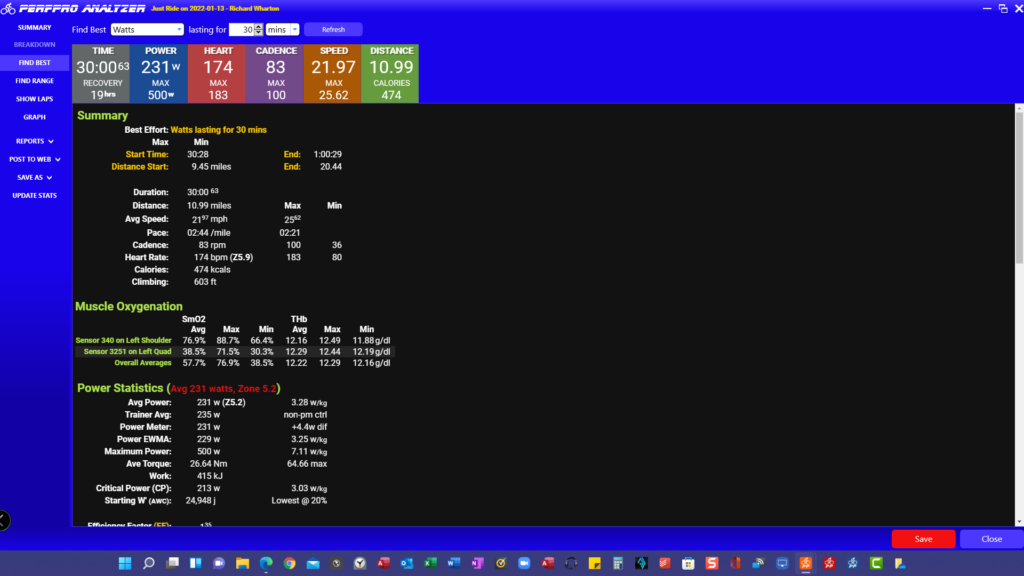
I averaged 231 Watts for 30 minutes, so the old, RaceDay Apollo Software was SPOT ON.
Merging SmO2 and DFAA-1 Information
Furthermore, when we look at the SmO2 values for the harder day, my SmO2 on my left deltoid dropped around minute 50, when I really redoubled my effort to finish strong.
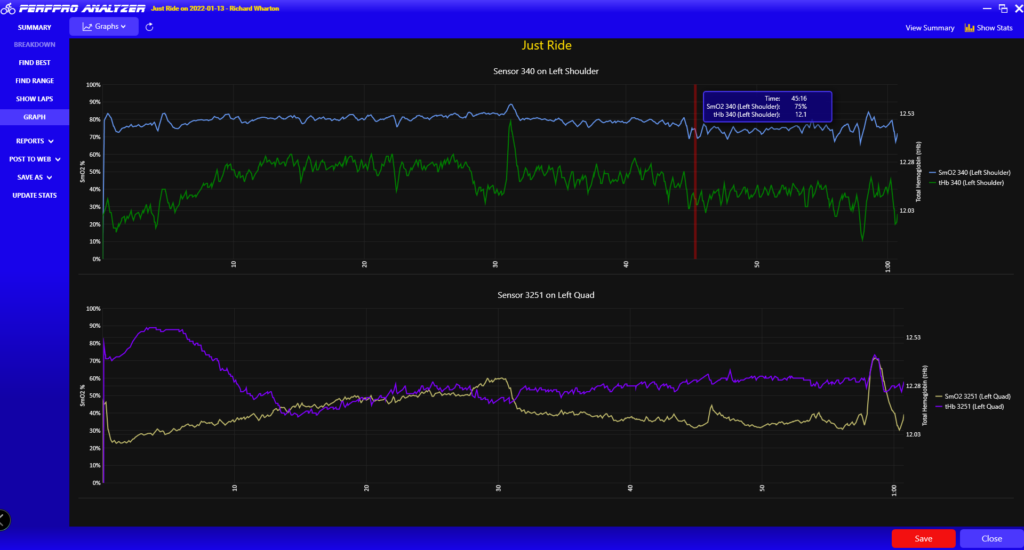
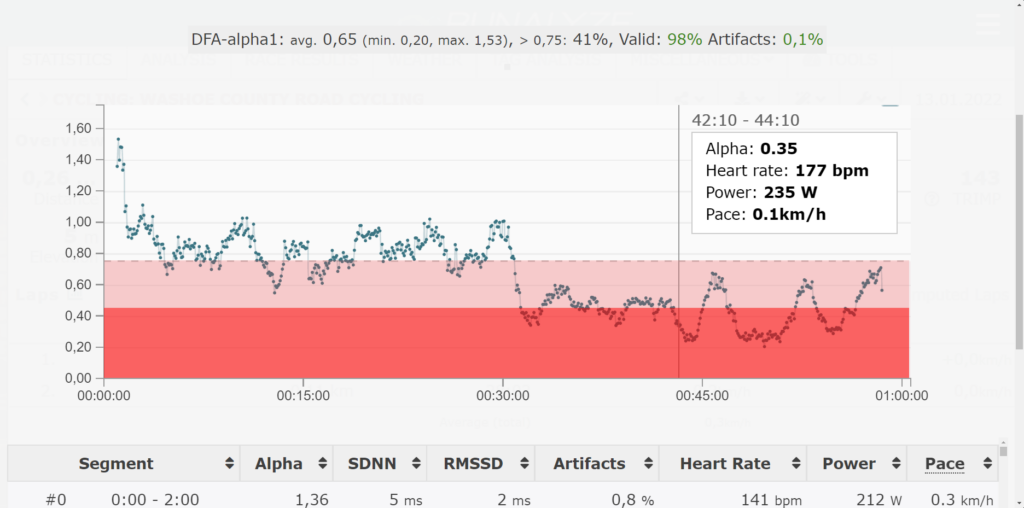
DFAA-1, at or above Threshold Wattage, occurs at 0.500. This chart shows that I held myself at the physiological Threshold until about minute 43. I then ended up alternating standing and sitting, because the saddle had slipped about 2cm, and I was no longer comfortable. I did not want to end the ride, however, so I continued alternating and still achieved the goal wattage.
DFAA-1 Aids ALL Aspects of Training
If we truly believe in the concept of POLARIZED TRAINING, then 80-90% of our training should be performed at an AEROBIC pace. 10-20% of our overall training should be performed at intensities above Threshold. I showed this to my readers last summer. Now we can see that, IN THE PRESEASON or BASE BUILDUP, that DFAA-1 ABOVE 0.75 and BELOW 0.99, delivers economy, stamina and performance. I’m currently at about 225-230 watts for Threshold, or about 75-78% of where I intend to be in May or June of this year. I can’t wait to see how close to 300 I really do get.