
Xert In a Crit: Prime Win and Victory!
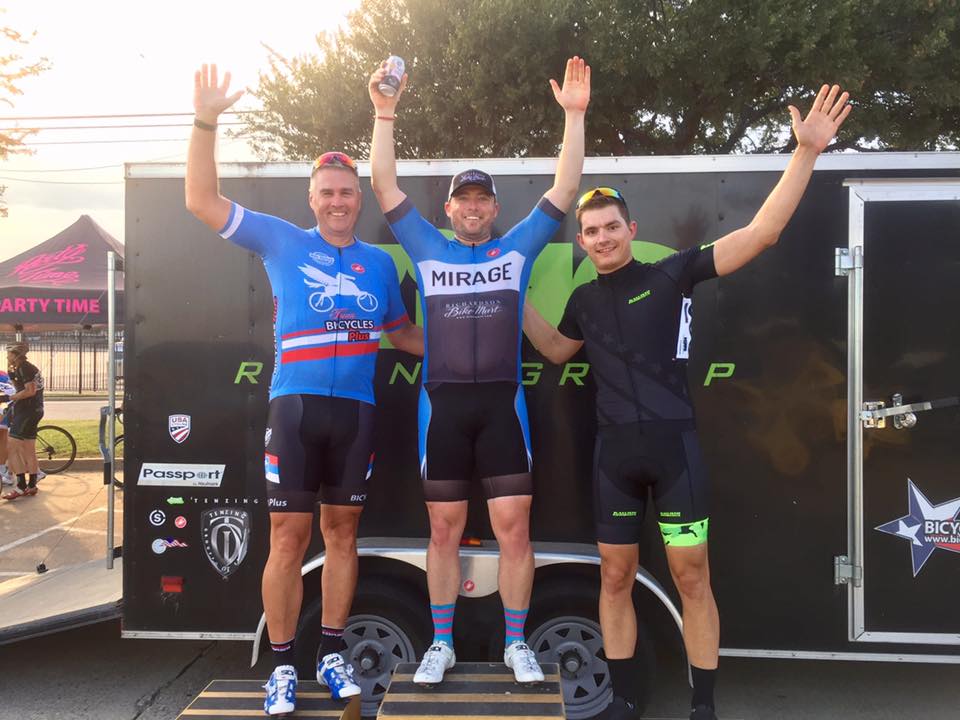
Travis Pope is a big guy with a big engine. He loves to ride, loves to race, loves Xert, and he loves to train with it. He has been a client for years, but has suffered several crashes that left him on the sidelines. It also affected his training consistency.
But this year has been a different story. Travis has trained consistently. In early June, he bought a Garmin 1000 and began training with Xert Fields.
The Race According to Xert
[caption id="attachment_1089" align="aligncenter" width="1005"]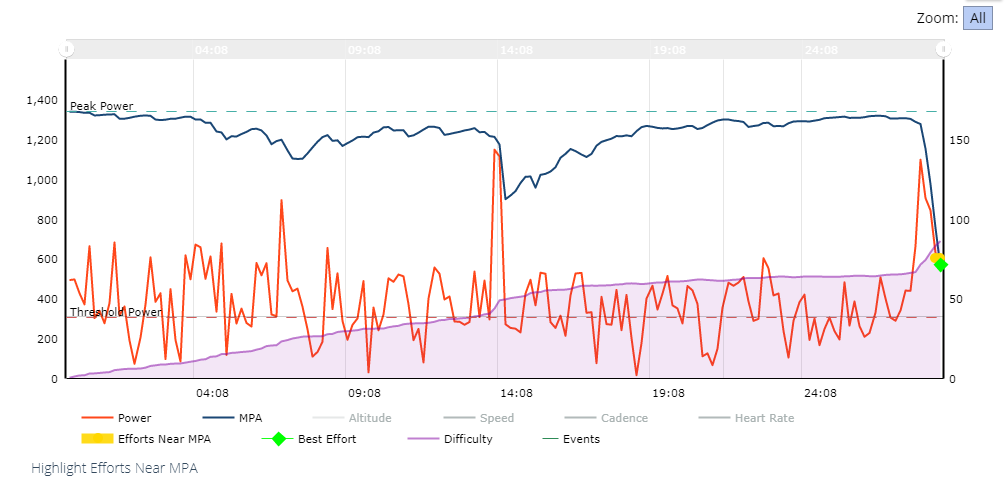 Xert Profile of Travis Pope’s Criterium Win. Note the severe drops in MPA in the middle and the end.[/caption]
Last night, it all paid off! Here’s how Travis used Xert training to turn his hard work into success on the podium.
Interval Shapes – Intensity Over Time
[caption id="attachment_1064" align="aligncenter" width="806"]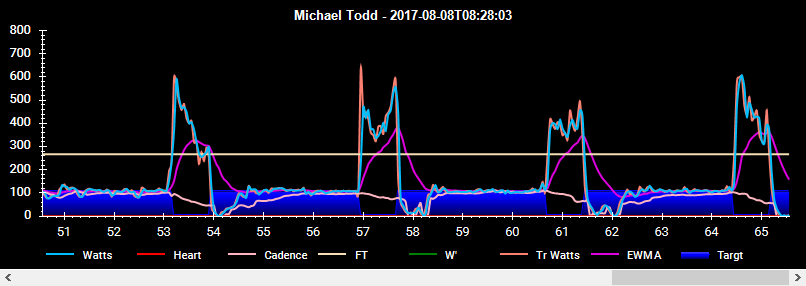 Which Interval Led to the highest average power?[/caption]
Take a look at this graph. Each interval has a different shape. It shows four separate 45-second intervals of maximal effort, on a 4% slope. I used PerfPro Studio to design this workout. Recoveries were three minutes each.
We also need to take into account that these intervals are taken 53 minutes into a 60 minute workout. The rider was fatigued, but the lesson is still relevant.
In this post I’ll show you how to use not just intervals but interval shapes to craft your intensity over time for maximum gains in fitness and available power.
Reliability, Accuracy, Results: The Beautiful Consistency of PerfPro Intervals

I’ve been using PerfPro Studio since it first came out in 2008. I’ve watched its capabilities grow, especially as we developed workouts and schedules for controlled progression and periodization. The workouts allow you to ride with absolute wattage, wattage as a percentage of Threshold, wattage based on percent of slope and any mix in between. […]
“On The Fly” FTP: Using Xert’s What’s My FTP App On Your Garmin
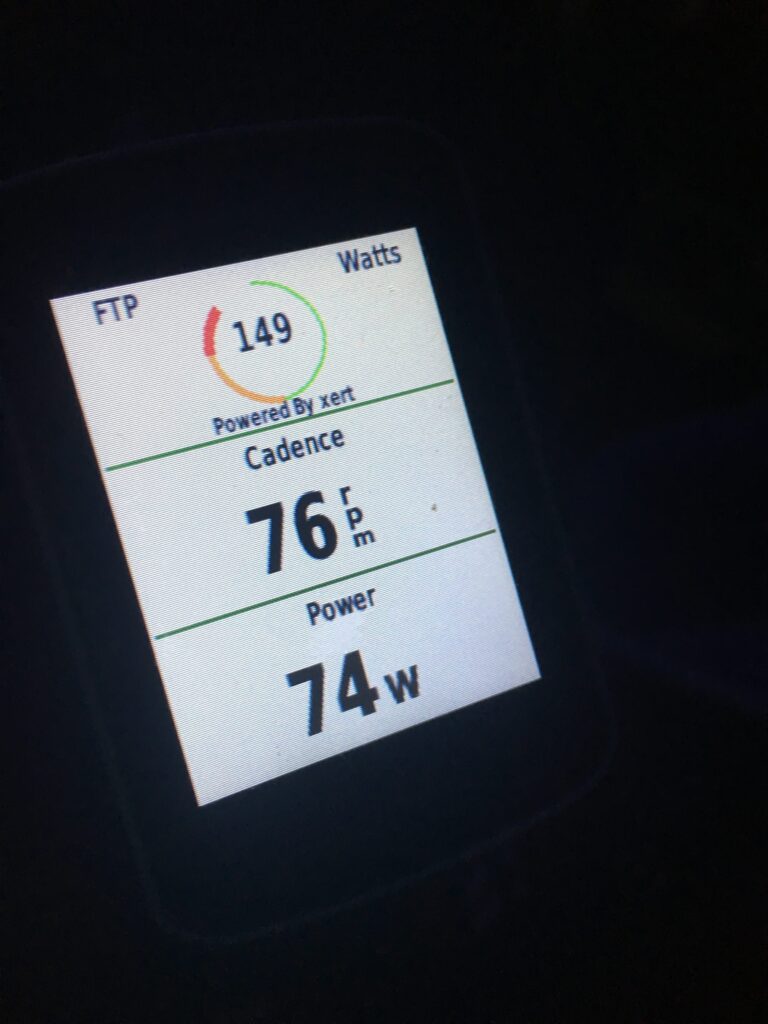
Not even a month ago, Xert by Baron BioSystems, released What’s My FTP? on the Garmin Connect IQ ecosystem. The premise is simple: if you have a smart Garmin head unit (520, 820, 920, 735, 1000) and an on-bike power meter, you can determine your Functional Threshold Power (FTP) with just a few solid, hard efforts, over a period of time.
I’m always skeptical about new product claims, but given Xert’s incredibly short but solid track record of apps that are dead-nuts on, I decided to give What’s My FTP a try. I put it to work for two of my clients, and all I can say is Wow—the results are incredible!
Now let’s show you how to get the same results for yourself.
Xert and Texas Mountain Biking, Part One
If you follow these posts, you know that I recently installed a power meter on my mountain bike, and began using it to study the demands that mountain biking requires for fitness. I installed it just before a trip to Arkansas, where my wife and I rode the Womble Trail, and I have since ridden […]
ShockWiz Tuning – A Video Discussion
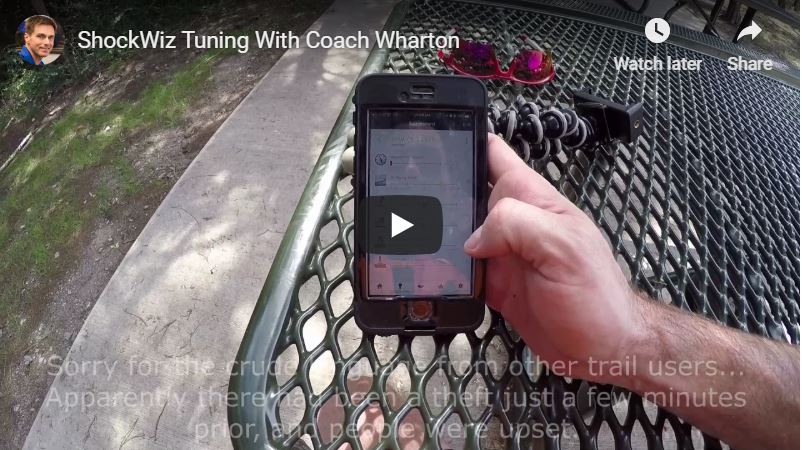
Here’s another video highlighting my experiences with the ShockWiz Tuning System for mountain bikes. This is a tougher trail, with more rock and twists and lips, and I’m convinced that I’ll be faster, and smoother, because of this investment.
OH yeah—6 watts difference on my average power between the first and second lap, led to a 2.5 minute improvement over 4.8 miles. THAT IS HUGE!
Studying Suspension With the Shockwiz
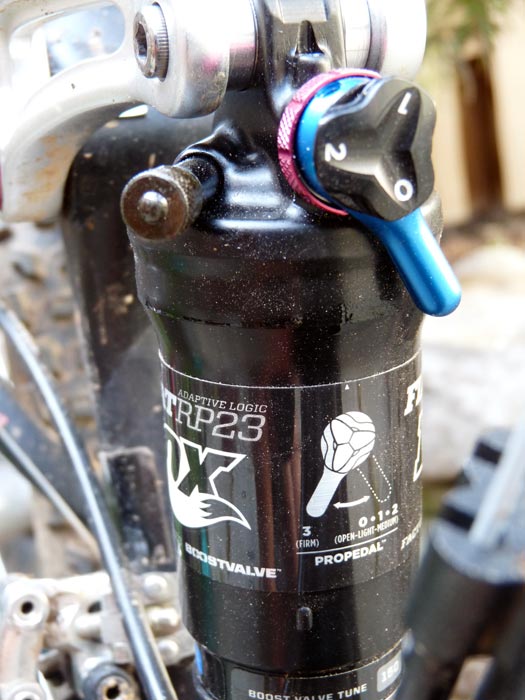 Air Pressure determines Sag and Compression, while the red ring sets rebound speed, and the black and blue dials help determine when the shock gets activated on bumps of different sizes.[/caption]
[caption id="attachment_914" align="aligncenter" width="768"]
Air Pressure determines Sag and Compression, while the red ring sets rebound speed, and the black and blue dials help determine when the shock gets activated on bumps of different sizes.[/caption]
[caption id="attachment_914" align="aligncenter" width="768"] Coach Wharton using a ShockWiz and a Power2Max to study mtb suspension on the Womble Trail in Arkansas.[/caption]
Mountain biking; nothing makes me happier on a moment-to-moment basis than riding a mountain bike. Mountain biking is where I began cycling, and its’ challenges continue to push me every time a throw a leg over and head down the trail. Mountain biking is fun, it’s something I can do with my wife and with friends, and the technology just continues to impress me, as suspension, geometry, wheel diameter, gear options, and brake technology improves in such a quantum way.
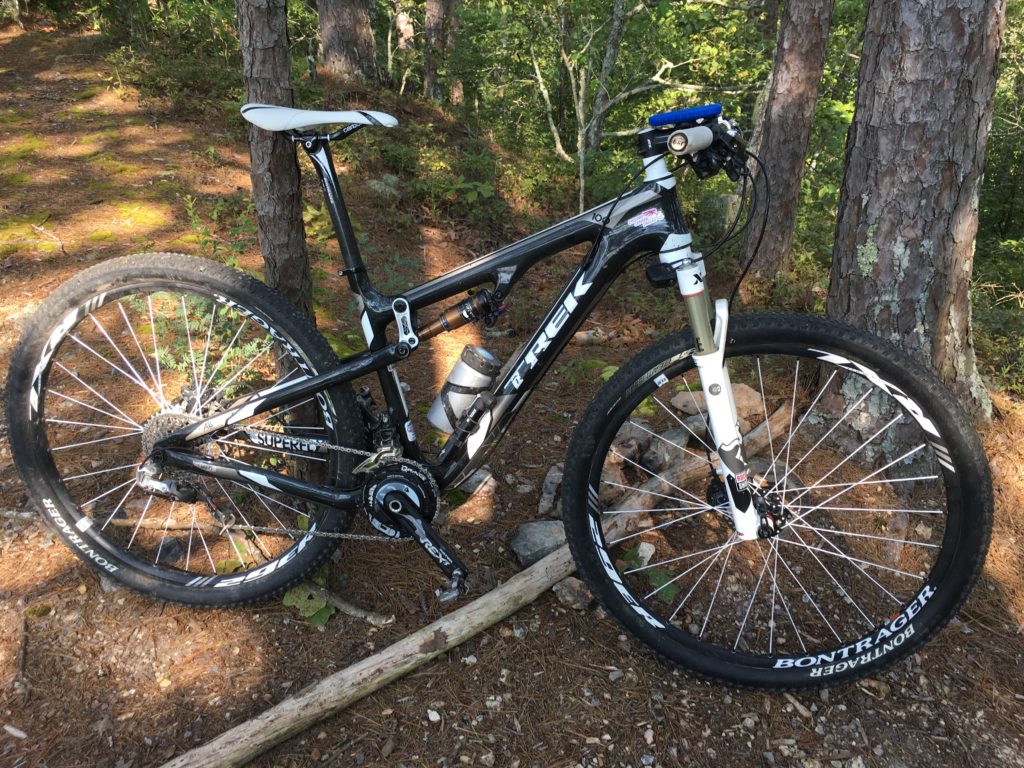 Coach Wharton’s Trek SuperFly with Power2max, Shockwiz, and Garmin 1000.[/caption]
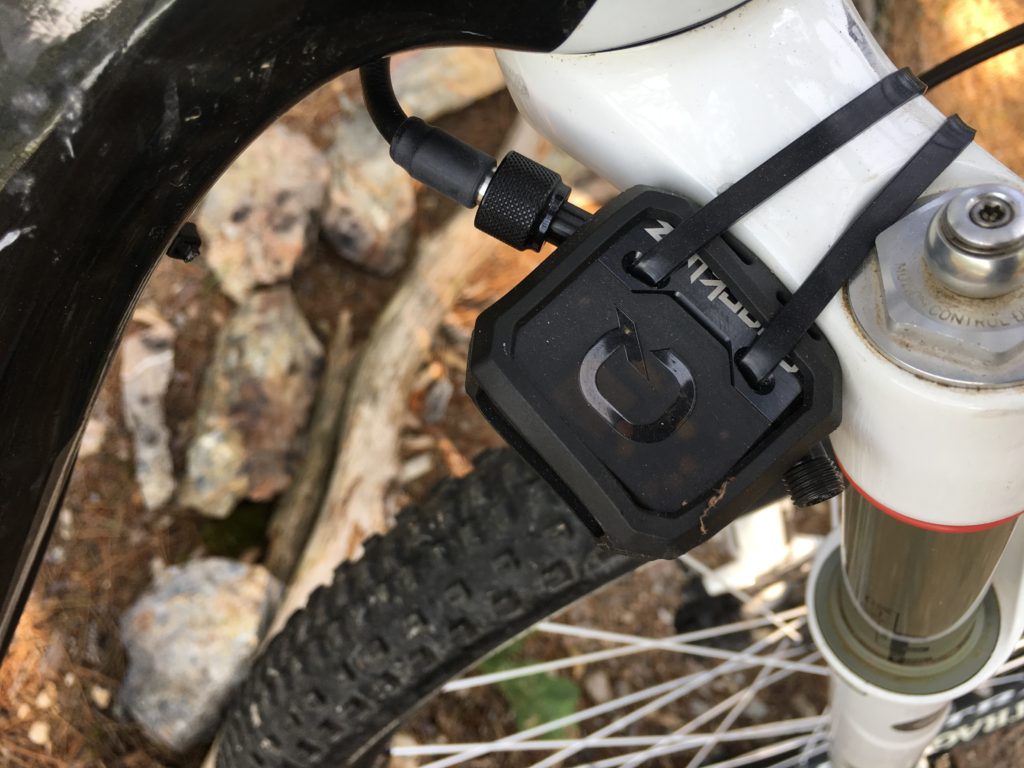 Shockwiz Suspension Tuner on a Front XC Sid Fork. Richard Wharton,[/caption]
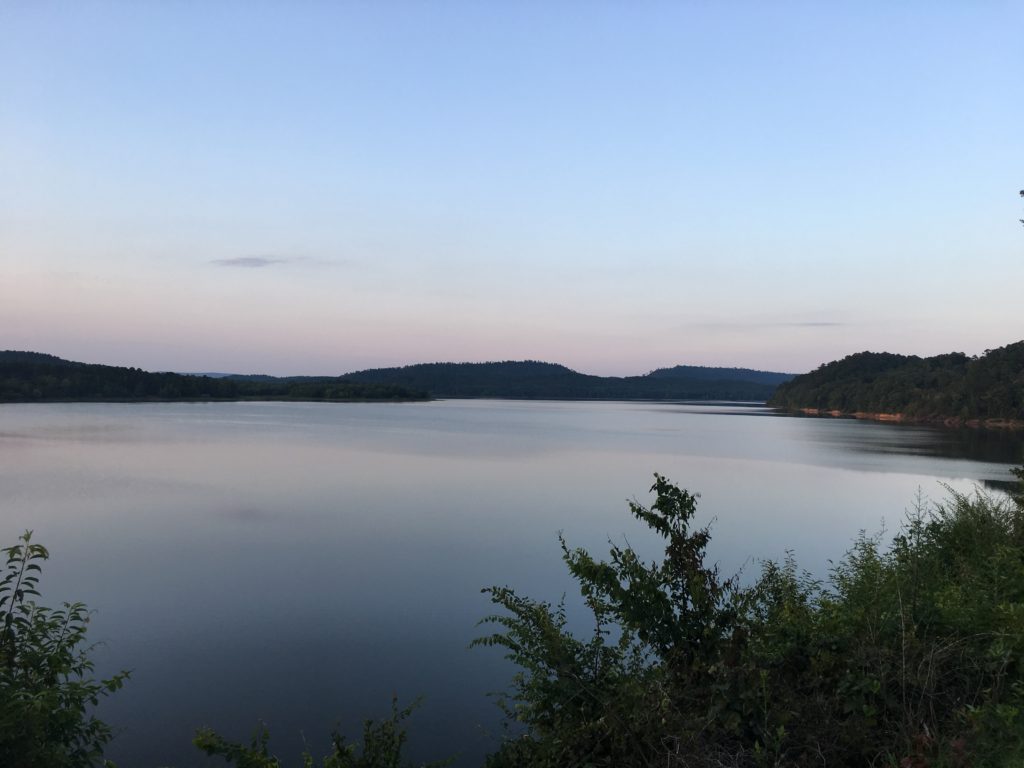 Wombly Trail and Ouachita Lake, Highway 27, Arkansas[/caption]
Read on (subscription required for this part) for a review of the initial recommendations…and step-by-step screencaps of how I worked through the process of getting the best suspension tune of my life.