Sleep and Intervals go Hand in Hand.
Good Sleep is critical to recovery, so that Intervals can be completed and be effective.
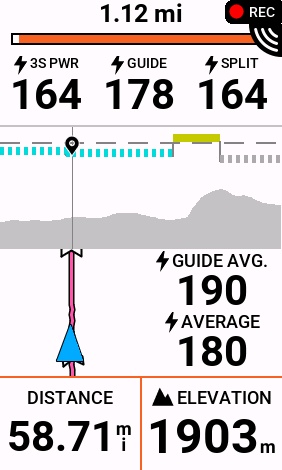
I failed a workout on Friday. The effort was an attempt to get Xert XSS points in. However, I got about 5 hours of sleep on Thursday evening; three hours and then two, after two hours awake. The Xert Adaptive Training Advisor is adjusting my goals every day, but it does not take sleep quality or quantity into account. The Xert ATA does look at fatigue due to volume, but it still acts as a carrot, and I am always out chasing the goal.
The thought did occur to me to take the day off, but my goal in this series is to follow the Xert Training Pacer and Workout Goals. I’m trying to do these outdoors as much as possible. I’m also trying to adjust my intensity on the mountain bike, since that is just so much more convenient. The trails are right outside my front door. Due to some time restrictions, I was unable to get outside and ride, so I opted instead for an inside ride with intervals.
The Xert ATA was asking for 91 points and a FOCUS of 16:36. None of the recommended workouts in the right column offered anything less than 90 minutes. So, I went to the left tab of the Xert – My Fitness page, and designed my own workout.
Here’s the workout in the Xert Workout Designer
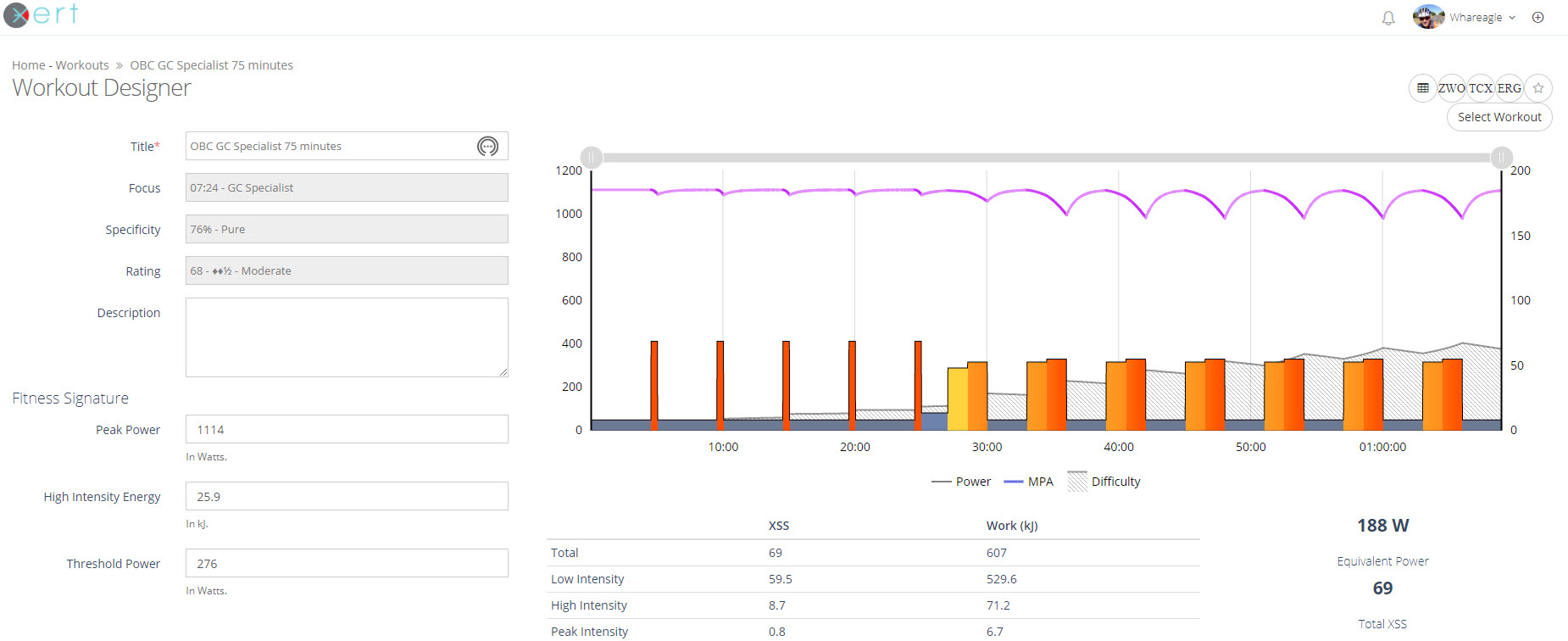
On Paper, this was entirely accomplishable. However, this is based on solid sleep and intervals that follow the SMART acronym.
When you look at the Purple MPA Line, and the grey background difficulty score, this workout is entirely accomplishable. The Total XSS score is just 69 points, well below my 91 points, but doable. But when you are fatigued, your body just does not handle the intensity well at all.
What is Deep Sleep?
There are lots of sleep trackers out there today, and perhaps Xert will include the Garmin Sleep Tracking metrics in future releases. But the main sleep value that I rely on is Deep Sleep. Statistics show that we need about 1hr 15min to 1hr 20min of Deep Sleep per night. Deep Sleep happens in small, short batches. There are also studies that show just how effective a 20-minute nap can be; good naps can include up to 7-10 minutes of Deep Sleep. So a good sleep must include Deep Sleep.
How do we get deep sleep? Well, that is truly tricky. It requires hydration, relaxation, cooler temperatures, a proper bedtime, noise-free atmosphere, and most importantly, a clear head. Work, family, and security are all weighing on people more these days. Life just is not that simple. I may try a sleep coach again in the future, but right now, I’m focused on 300 watts and a Personal Record on a climb in six weeks.
Garmin Performance Condition Metric
Now THIS is a tool in the Garmin Field Features that might be the perfect accompaniment to Xert’s Form Line. It also acts as a bellweather, telling you that, based on empirical heart rate and sleep data, the workout you’re performing may or may not be helping you.
It runs on a scale from +20 to -20, and it takes about 10-20 minutes to populate. You do need one of the more advanced heart rate straps which can measure Heart Rate Variability. It’s just another tool in the toolbox. I’ll show you in a separate blog post some day how to better use this metric, but suffice it to say that I was warned. My Garmin Performance Condition Metric showed “-12” at one point during the workout.
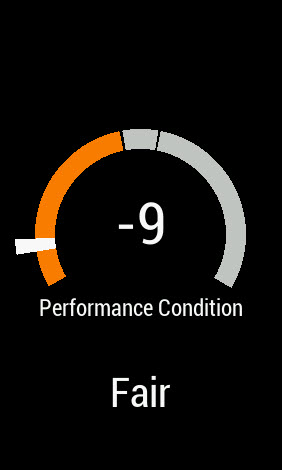
In summary – it was NOT a good day to be on the bike.
CONCLUSION
Sleep is a critical component to achieve good intervals. At the intensities I am riding, there is a fine line between “good”, and “poor”. The Xert Adaptive Training Advisor can ADAPT with data and input, but it does not mean the workouts are MANDATORY. They are ADVICE and SUGGESTIONS. If you haven’t slept well, curtail your activity level or take a day off. It won’t hurt your program; it may even help.